Commercial Window Cleaning in Melbourne
Commercial window cleaning in Melbourne for offices, towers, strata buildings, shops and factories. We work out how your glass can be reached safely, then give you one fixed price for the whole building. Start with our commercial window cleaning services or ask for a quote now.
- 24 hoursfor a written, fixed quote
- 4 methodspole, platform, cradle and rope
- 1 crewfrom awning glass to parapet
- IRATA ropeTwo ropes per drop
- SWMS firstBefore any climb
- Out of hoursNights and weekends
- CommercialNo house rounds
Dirty glass is the first thing a tenant, a buyer or a customer notices. Getting it clean safely is the hard part.
This page is for the people who answer for a building's presentation and its safety record: facility managers, strata managers, office managers and business owners. Commercial window cleaning covers a wide spread of work. On a Tuesday it might be a before-trade round on a strip of shops in South Melbourne. By Thursday it could be a crew abseiling a 20-storey curtain wall on St Kilda Road, with a spotter on the footpath and a rescue plan in the site file.
Plenty of window cleaning services in Melbourne can handle a shopfront. Most of the trouble we get called in to fix starts with a mismatch between the building and the method. A cleaner turns up with poles for a tower that needs rope access. A quote gets approved, then grows once the crew sees the sunshades. A job stops at level six because nobody checked the roof anchors. None of that is about scrubbing technique. It is about planning, and planning is where we spend our time before anyone climbs anything.
We take on commercial buildings and nothing else. No house rounds fill the gaps in our week, so our crews, our insurance and our paperwork are all set up for offices, towers, owners corporations, retailers and industrial sites. If you already know what you need, the quote bar above takes about a minute. If you do not, the sections below explain how we decide, so you can check our thinking before you commit to anything.
- Facility and building managersWho need the glass on a schedule and a clean audit trail behind it.
- Strata and owners corporation managersWho need a quote the committee can approve at the first meeting.
- Retailers and business ownersWho want the frontage clear before the doors open.
- Property managers with portfoliosWho want one contractor and one reporting format across every site.
What does commercial window cleaning cover at each building height?
Commercial window cleaning is the cleaning of glass on buildings used for work, trade or shared living, done at whatever height the glass sits. The method changes with height: poles near the ground, platforms in the middle, rope or a maintenance unit near the top.
Press a floor
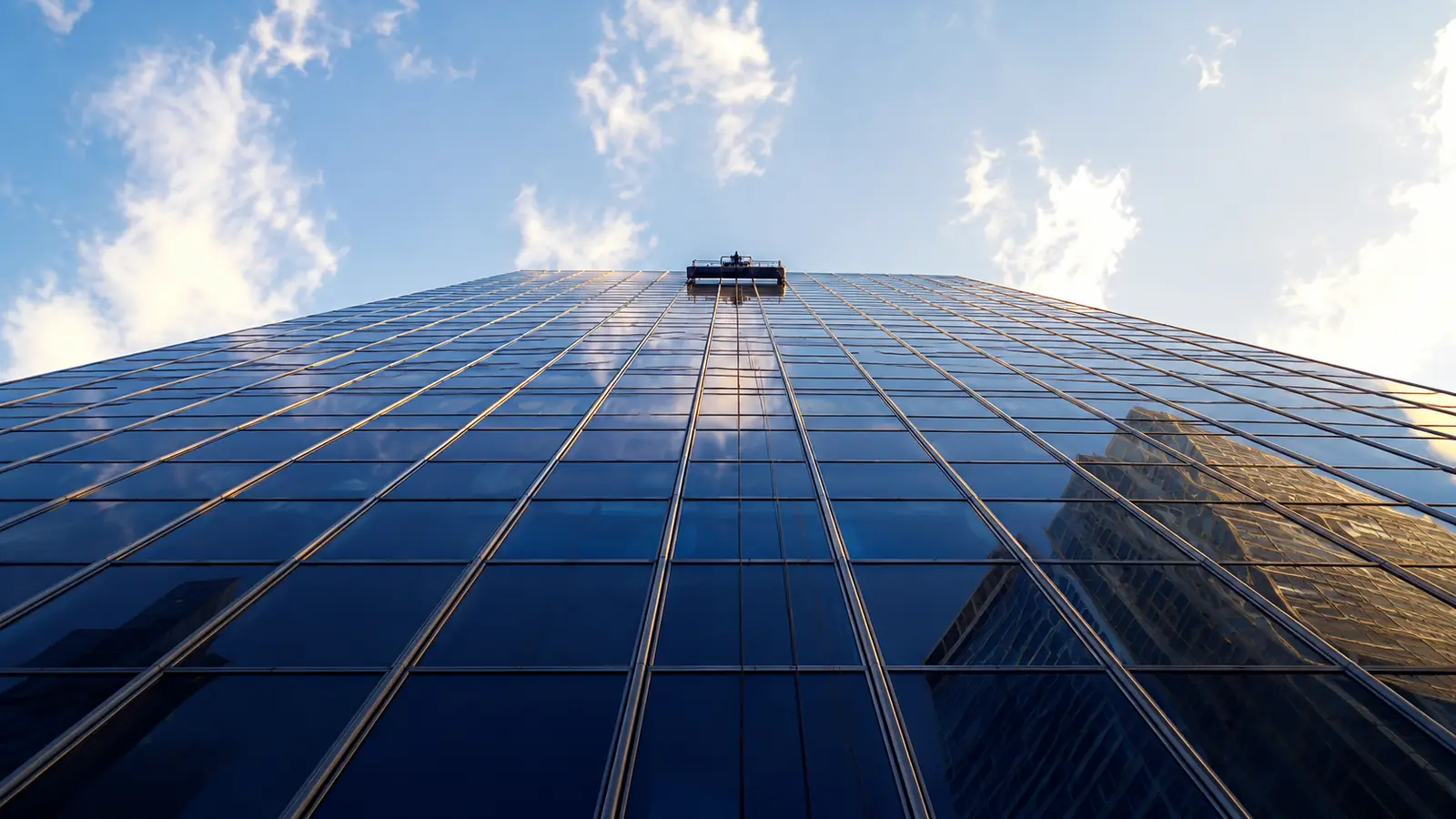
13 storeys and above
Rope access or a building maintenance unit
Full drops down the facade, planned around roof anchors, wind and the footpath below. Where the tower has a cradle in service we use it for the broad flat glass, then switch to rope for corners, fins and anything the cradle cannot reach.
7 to 12 storeys
Rope access, a cradle or a large boom lift
This is the band where the choice is closest. Rope usually wins on cost unless the building has a cradle or clear hardstand below for a big boom. We look at the setbacks, the podium and the neighbours before recommending one.
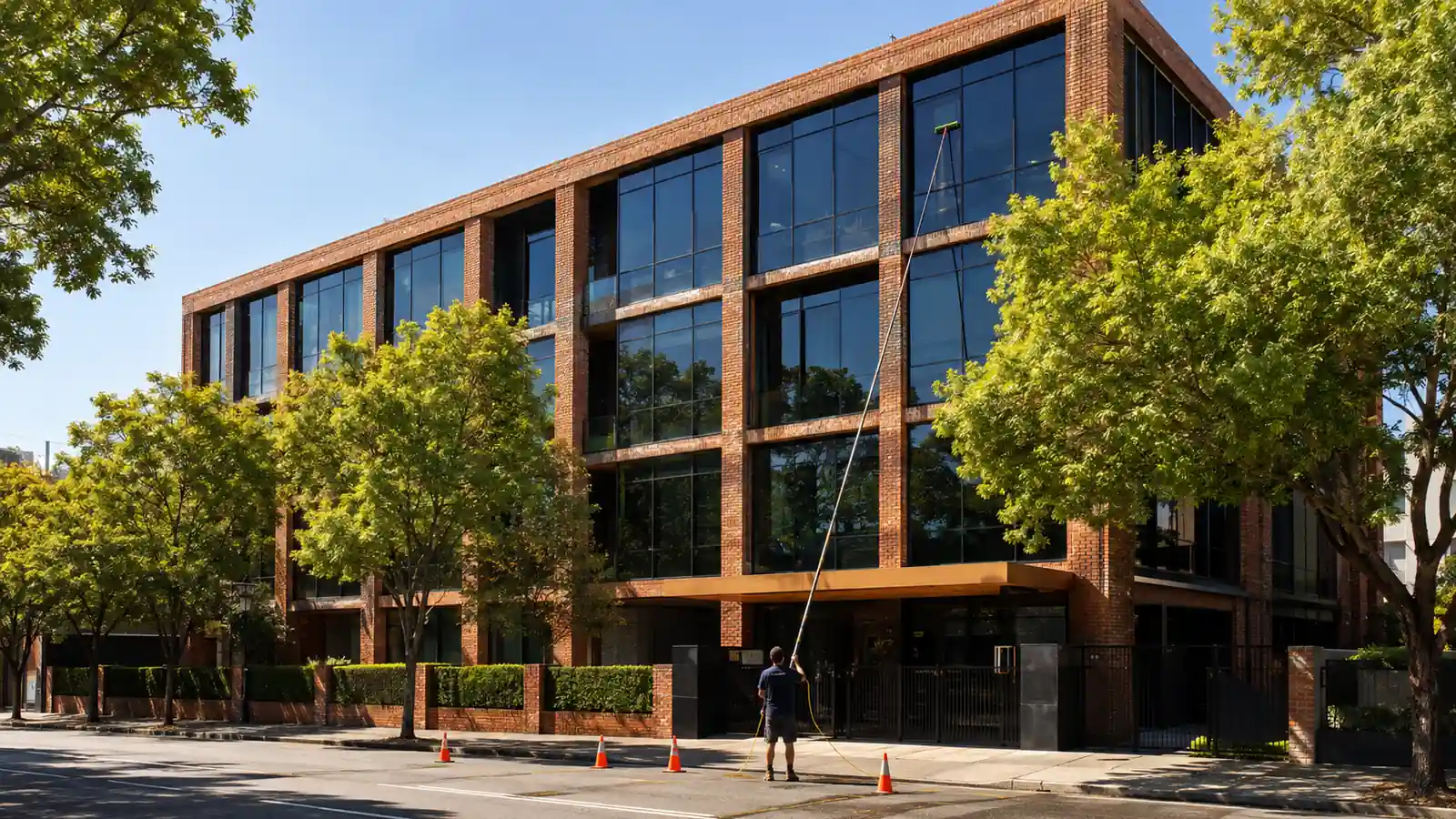
3 to 6 storeys
Water-fed pole or an elevating work platform
Carbon poles reach roughly 18 to 20 metres from the ground on a calm day, which covers most buildings in this band without anyone leaving the footpath. A platform comes in for deep setbacks, courtyards and glass over voids.
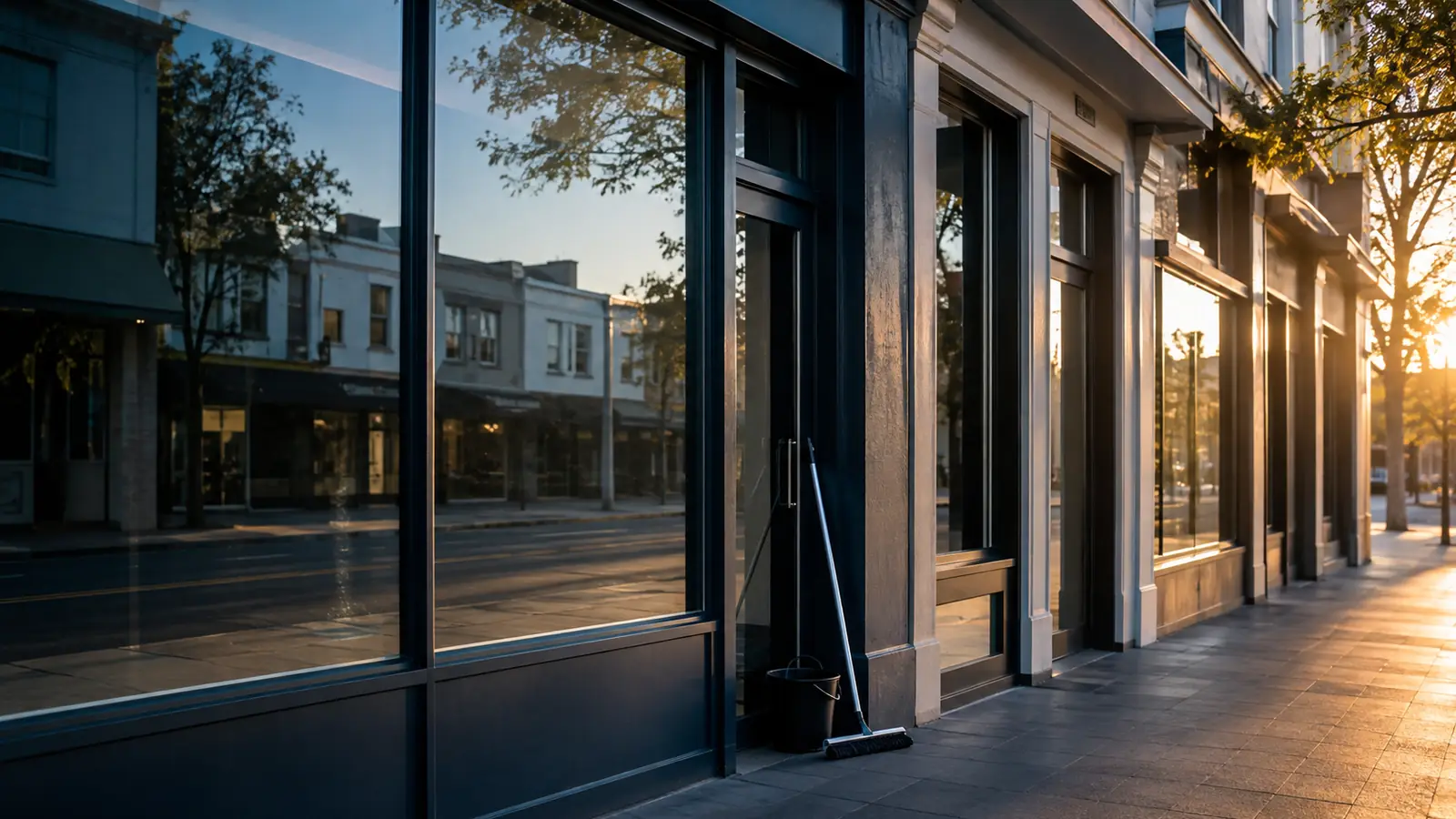
Ground to 2 storeys
Pole work with a hand finish
Entries, awnings and shopfronts, where people look closest and notice most. Pole work handles the reach, and a squeegee and cloth finish the doors, handles and signage glass so nothing streaks at eye level.
- External glass
- The facade side: curtain walls, spandrel panels, window frames and sills, plus entry glass and awnings at street level.
- Internal glass
- Partitions, meeting room walls, atrium glazing, balustrades and the inside face of the windows, usually cleaned after hours.
- Hard-to-reach glass
- Skylights, sawtooth roof glazing, lift shaft glass and anything over a void, which needs its own access plan.
Height decides almost everything about a commercial clean: the equipment, the crew, the paperwork, the time it takes and the price. That is why we sort every enquiry by storeys before anything else. A two-storey medical suite in a business park and a 30-storey tower in the CBD both count as commercial window cleaning in Melbourne, yet they share very little beyond the squeegee.
The panel above is a rough guide, because real buildings rarely sit neatly in one band. Setbacks, podiums, awnings, sunshades and the space around the base all push the choice one way or the other, which is why we ask for the address before we talk price. What stays the same at every height is what a manager pays for: glass that looks right, no incidents on site, and a record showing the work was planned properly.
Which commercial buildings do we clean?
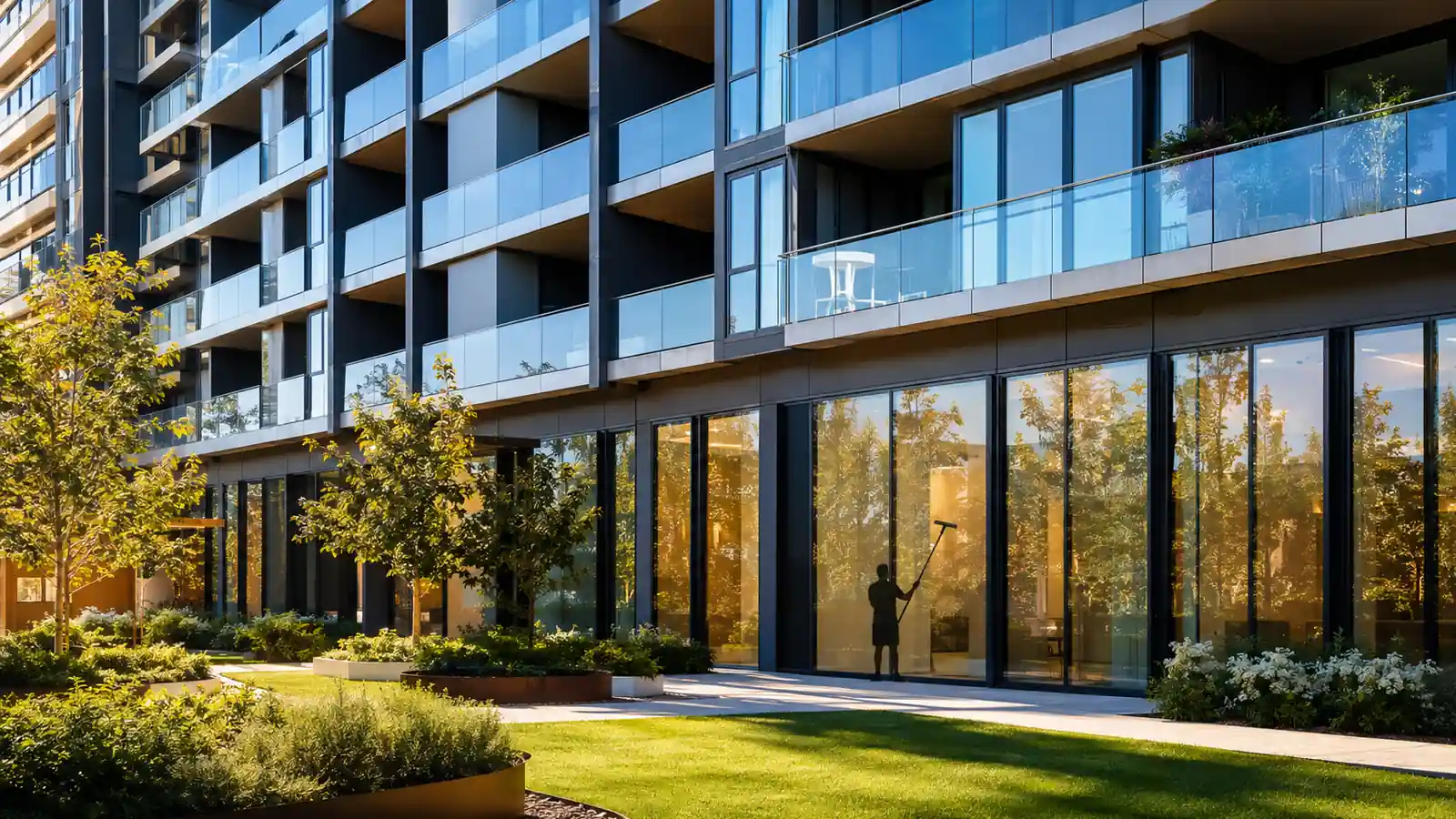
We clean eight kinds of commercial work: high rise towers, rope access jobs, offices, low and mid-rise buildings, strata blocks, retail frontages and factories, plus scheduled programs that keep any of them in shape through the year.
High rise window cleaning
Full-height facades cleaned by rope or building maintenance unit, timed around wind, anchor records and tenant hours.

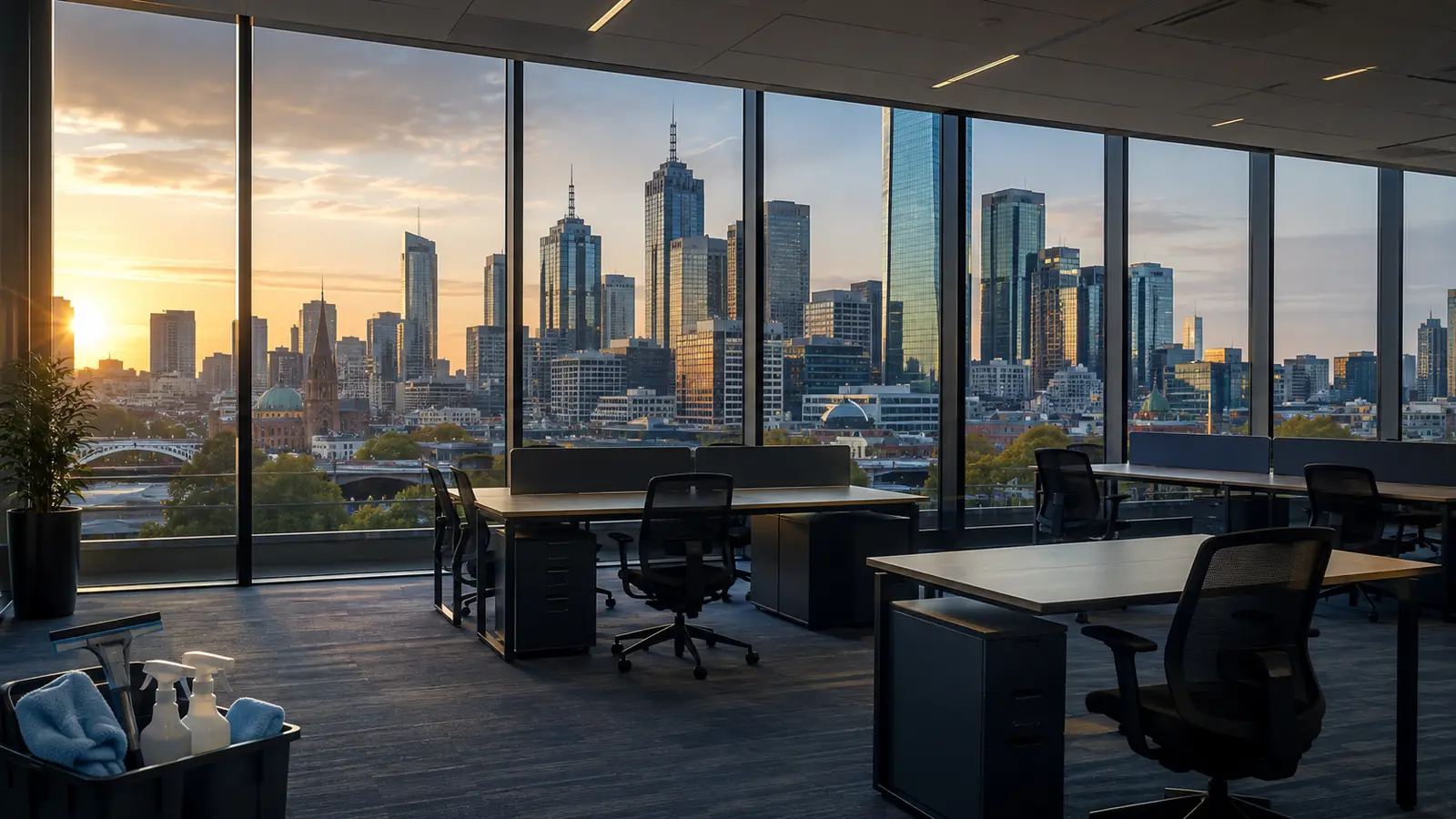
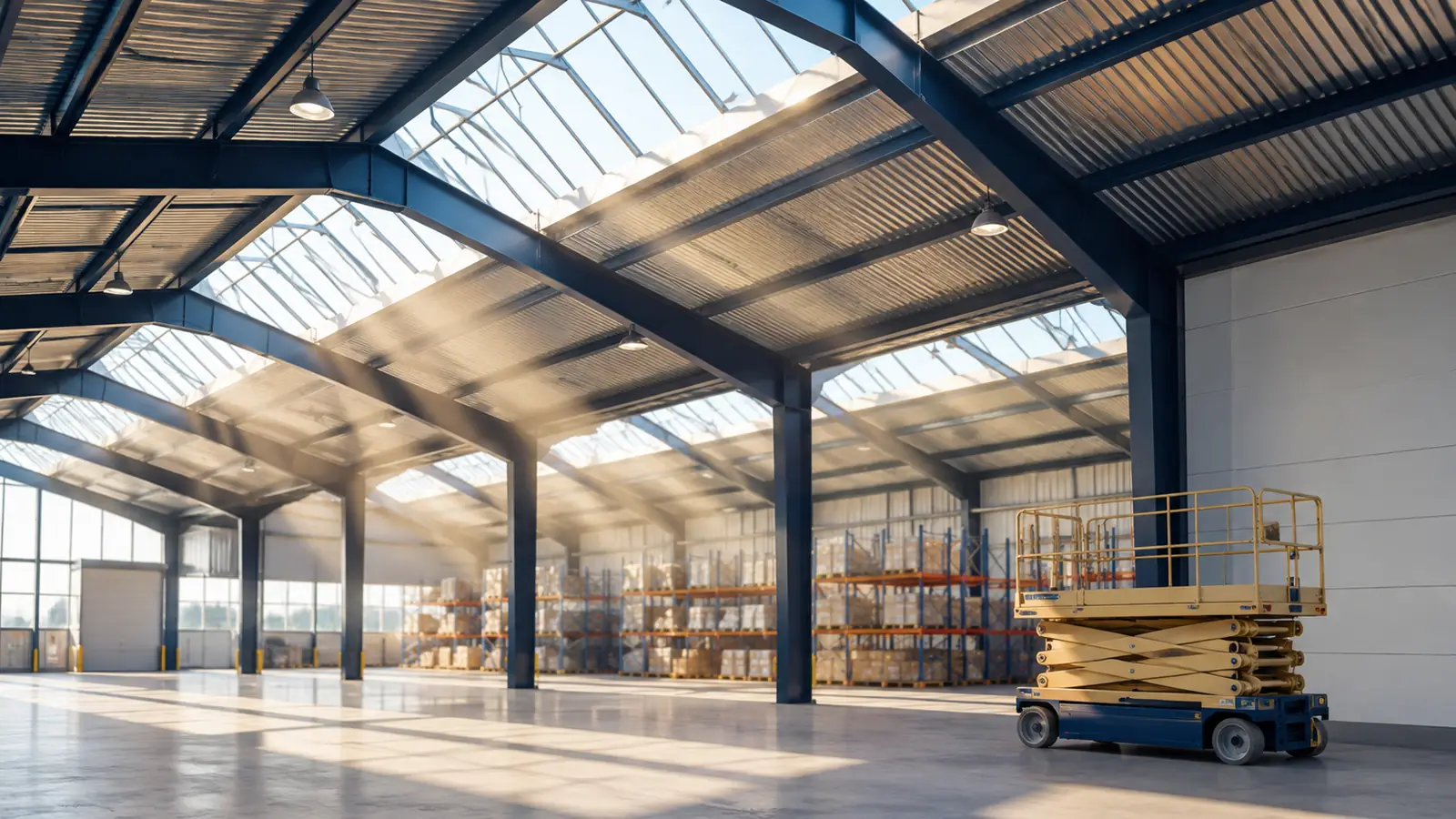
Factory and industrial window cleaning
High warehouse glass and sawtooth roofs, inductions and permits done.
Scheduled window cleaning programs
Monthly, quarterly or yearly rounds on a fixed calendar and a rate that holds for the term, so nobody has to remember to book the glass.
Own a mix of buildings? Most portfolios need three or four of these services at once. Tell us every address in one message and we will quote the lot on a single schedule.
Quote a portfolio Full drops, no scaffold on the footpath
Why is high rise and rope access work our strength?
Because most window cleaners stop where the pole stops, at around the fifth or sixth floor. Our crews keep going. Rope access and maintenance-unit work are run in house, so a tall building is a normal job for us rather than something passed to a subcontractor.
Above pole height, only two groups can reach the glass: technicians trained and certified to work on rope, and operators who know how to run a building maintenance unit. Plenty of cleaning companies hire those people in for the day. We would rather employ them, because the quality of a tower clean depends on the same crew knowing the roof, the anchors, the tenants and the quirks of the facade from one visit to the next.
Keeping the work in house also changes what you pay and who answers for the result. When tall glass is subcontracted you pay two margins, deal with two companies, and the accountability blurs the moment a panel is missed. With one crew owning the facade from podium to parapet, there is one quote, one method statement and one team to call back. It keeps our advice honest too. We gain nothing by talking a building into scaffold or a hired boom lift when a rope drop is cheaper and leaves the footpath open.
Melbourne adds its own twist: weather that turns inside an hour and wind that funnels hard between towers. We check the forecast from the Bureau of Meteorology before every drop and plan spare days into tower schedules, so a gusty morning pushes the work back instead of forcing it through.
- 2independent ropes on every technician, a working line and a backup
- 3IRATA grades, with a Level 3 supervising rope work on site
- 0scaffold needed for a standard rope clean, so no street permit for it
How do we reach the glass on your building?
With one of four methods, or a mix of them: a water-fed pole from the ground, an elevating work platform, the building's own maintenance unit, or rope access. The choice depends on height, the facade, what is installed on the roof and the space at the base.
Water-fed pole
Up to about 18 to 20 m from the ground
A carbon fibre pole pumps purified water to a soft brush at the glass. With the minerals stripped out, the water dries without spotting, so nobody needs to squeegee each panel. The technician stays on the ground the whole time.
- Street impact
- Minimal
- Best for
- Low and mid-rise facades, shops, schools
- Watch for
- Deep setbacks and strong wind
Work platform
Depends on the machine and the ground
A boom or scissor lift puts the technician right at the glass, which suits atriums, voids and warehouse glazing. Operating a boom with a length of 11 metres or more needs a WP class high risk work licence in Victoria.
- Street impact
- Needs hardstand, sometimes a permit
- Best for
- Atriums, industrial glass, courtyards
- Watch for
- Ground conditions and hire cost
Maintenance unit
Full height, where one is fitted
Many towers were built with a roof cradle, often called a BMU, that travels the facade on a track or arm. Where one is in service it is usually the quickest way to clean a large flat curtain wall. We check its inspection status before booking.
- Street impact
- Low, works from the roof
- Best for
- Towers designed with a cradle
- Watch for
- Service records and parapet corners
Rope access
Full height, on any face with sound anchors
Technicians descend on a working rope with a separate backup rope, clipped to roof anchors. It reaches stepped facades, feature fins and buildings with no cradle. Anchors are generally inspected at least every 12 months under AS/NZS 1891.4, and we sight the record first.
- Street impact
- Small exclusion zone below
- Best for
- Towers, curtain walls, no-cradle buildings
- Watch for
- Anchor records and wind
| Method | Where the technician works | Typical building | Main limit |
|---|---|---|---|
| Water-fed pole | On the ground | Two to six storeys | Reach and gusts |
| Work platform | In a basket at the glass | Atriums, warehouses, voids | Firm ground to set up on |
| Maintenance unit | In the building's cradle | Towers built with one | Unit must be in service |
| Rope access | On two ropes down the face | Towers and complex facades | Certified anchors and weather |
Most real jobs mix two methods. A tower might be roped for the sheer glass and finished with a pole along the podium. A business park might be pole work with a scissor lift for one courtyard. We price that mix as a single job, and our guide on how high rise windows are cleaned walks through the tall end in more detail.
Site document pack
Sample building: 12-storey office. Method: rope access plus pole.
- Safe work method statement for this building
- Rescue plan for the rope work
- Roof anchor inspection record sighted
- Public liability certificate of currency
- Crew tickets and IRATA numbers
- Exclusion zone and footpath plan
- Close-out photos once the clean is done
An illustration of what the pack contains, not a record from a real job.
How are safety and compliance handled on every job?
Every job gets a written safe work method statement for that building, a check of anchors or access equipment, and an exclusion zone wherever people walk below. We send the documents before the crew arrives, so they are in your file on day one.
Work at height done badly costs far more than a streaky window. It puts the crew at risk, along with anyone walking underneath and the person who engaged the contractor. In Victoria, whoever manages or controls a workplace keeps duties to the contractors working on it. Hiring a cheap crew with no method statement saves nothing, because the risk lands back on your desk.
WorkSafe Victoria's compliance code on preventing falls explains how to control the risk of a fall from more than 2 metres. It works through a hierarchy that starts with doing the task from the ground where you can, which is one reason we reach for a pole before we reach for a rope. When height can't be avoided, rope work follows the industry's two-rope system, and platform work follows the licensing rules for the machine.
Before a crew leaves the depot, a pack like the one shown here is already in your inbox. The method statement names the building, the access method, the anchors or equipment being used and the exclusion zone at the base. The rescue plan says who does what if a technician needs help on the rope. The insurance certificate is current, and the crew list shows the tickets each person holds. You should not have to chase any of it.
You can read the source guidance yourself, and we would encourage any building manager to do so before hiring anyone. Our plain-English summary of window cleaning safety and compliance in Victoria covers the questions worth asking.
Which cleaning program suits your building: one-off, quarterly or monthly?
Most commercial glass is better kept on a program than cleaned only once it looks bad. Quarterly suits the majority of offices and mid-rise buildings, monthly suits busy retail and prestige addresses, and a one-off clean covers handovers and special events.
| Sample year | Jan | Feb | Mar | Apr | May | Jun | Jul | Aug | Sep | Oct | Nov | Dec |
|---|---|---|---|---|---|---|---|---|---|---|---|---|
| One-off cleanBooked when you need it | ||||||||||||
| Quarterly roundThe usual pick for offices | ||||||||||||
| Monthly programRetail, hotels, showrooms | ||||||||||||
| Street level, fortnightlyBusy frontages as an add-on |
Single visit, any monthQuarterly visitMonthly visitStreet-level top-up
One-off clean
End of lease handovers, builders' film after a fit-out, a sale campaign or a board visit. Priced as its own job.
Book a single cleanQuarterly round
Dates set a year ahead and a rate held for the agreement. Interior glass can be added on alternate visits.
Set up a quarterly roundMonthly program
For glass that customers judge every day. Same crew and same slot each month, with street glass topped up between.
Plan a monthly programA program gets rid of the two things managers tell us they hate most: chasing a cleaner every season and opening an invoice that is bigger than expected. You approve the schedule and the rate once, the visits happen, and a short report lands after each one. Read more about how scheduled rounds are set up and priced.
The right interval depends on how quickly your building gets dirty, and that varies more than people expect. Traffic grime builds fastest on the lower floors of busy streets. Salt spray off Port Phillip coats the bayside faces. Dust from a building site next door can dull a facade within weeks. We look at all of that before recommending a frequency, and adjust the program when things change.
Where across Melbourne do we work?
We work across metropolitan Melbourne, with most of our time spent in the six precincts where tall commercial glass is concentrated: the CBD, Docklands, Southbank, St Kilda Road, South Melbourne and Port Melbourne.
- 1
Window cleaning Melbourne CBD
Curtain-wall towers beside heritage frontages. Busy footpaths make exclusion zones and early starts the priority.
- 2
Window cleaning Docklands
Newer glass towers along the water. Wind off the bay means drops are planned around the gusts.
- 3
Window cleaning Southbank
Tall apartment and mixed-use towers. Resident privacy and balcony glass, with rope work the norm.
- 4
Window cleaning St Kilda Road
Set-back corporate buildings. Car park and loading dock access matter more than pedestrians.
- 5
Window cleaning South Melbourne
Showrooms and low-rise offices. Mostly pole work, fitted around trading hours and parking.
- 6
Window cleaning Port Melbourne
Business parks and industrial fronts. Site inductions, trucks and forklifts share the yard with us.
Outside those six, we also take on buildings in Richmond, Cremorne, Collingwood, Carlton and the business parks further out. The full coverage list is on our areas we serve page.
What does commercial window cleaning in Melbourne cost?
It depends on four things: how the glass is reached, how much glass there is, how detailed the facade is and how often it gets cleaned. A shopfront round costs very little per visit. A full tower drop is priced as its own project.
- Height and accessWhy it movesRope and cradle work need more people, more setup and a rescue plan.Keep it downUse the building's own cradle or anchors where they are in service.
- Glass areaWhy it movesMore panels means more time on the facade.Keep it downClean every elevation in one visit instead of in pieces.
- Facade detailWhy it movesFins, sunshades and stepped levels slow every drop.Keep it downSend photos so the quote reflects the real facade.
- Time since the last cleanWhy it movesGlass left for years needs far more work on the first visit.Keep it downPut the building on a program after the first clean.
- Hours and site rulesWhy it movesNight work, lift bookings and permits add planning time.Keep it downAllow flexible starts when tenants can manage it.
We do not quote towers and shopfronts from one price list, because the cost comes from how hard the glass is to reach, not from a flat rate per window. That is also why we avoid hourly pricing. An hourly rate rewards a slow crew and leaves you exposed if the wind picks up or the access turns out harder than expected. A fixed price puts that risk with us, which is where it belongs, since we are the ones who assessed the building.
The influence bars show how much each factor usually moves a quote, not a fixed formula. The full breakdown by building type, with the assumptions behind each number, is on our commercial window cleaning cost page.
Why do building managers choose us?
Because we answer quickly, put everything in writing and finish what we start. The reasons below can all be checked before you sign, which is how we think a contractor should be judged.
- 01
A price inside a day
Send the building details and a written, fixed quote comes back within 24 hours. Most jobs can be priced from photos and the address alone.
- 02
Paperwork that stands up
Method statements, rescue plans and insurance certificates arrive before the crew does, ready for an auditor or an insurer to read.
- 03
No gap at pole height
Our rope crews are our own, so the upper floors are cleaned by the same company that cleaned the lower ones, on the same day.
- 04
A crew that knows your site
On a program, the same people return each time. They learn where the anchors are, which tenants start early and which lift to book.
- 05
Commercial work only
We don't run house rounds on the side. Our gear, our cover and our training are all aimed at the buildings you manage.
- 06
Photos when it is done
A short close-out report with photos follows each clean, so you can show the owner the result without walking the site yourself.
You will not find borrowed praise or review badges on this page. We would rather you judge us on a first job than on claims you cannot check. Ask us for the documents above, compare them with what other contractors send, and decide from there.
How do we work with strata, facility and property managers?
We follow a five-step routine designed around how managers actually buy: a clear brief, an access plan, documents up front, a quiet clean and a close-out report. You approve two things, the price and the date, and we take care of everything else.
- BriefYou send the address, storeys and any access notes. Photos help.
- Access planWe pick the method, check anchors or the cradle and set the crew.
- DocumentsMethod statement, rescue plan and certificates go into your file.
- CleanNotices go out, zones go up, the glass is done in the agreed window.
- Close-outPhotos and a short report confirm the job is finished.
Strata managers
Quotes are itemised so a committee can approve them without a second round of questions. We write the resident notice, handle privacy on balcony drops and can split common-area glass from full-facade work if the budget needs it.
Facility managers
We fit around your inductions, lift bookings, loading dock times and tenant rules. If the building has a maintenance unit, we coordinate its inspection status with you before the booking is confirmed.
Property managers
One contractor across every site means one insurance check, one report format and one contact. New buildings slot into the existing calendar instead of starting a fresh tender each time.
Want to know more about the people behind the ropes before you commit? Our about us page covers how the business is run and how our crews are trained.
How do you get a fixed quote?
Tell us three things: where the building is, how tall it is, and anything unusual about access. That is enough to price most jobs, and a written fixed quote comes back within 24 hours.
- The addressSo we can view the facade, the footpath and the neighbours before we price anything.
- Height or number of storeysThis decides the method, and the method is the biggest driver of cost.
- Access notesRoof anchors, a cradle, restricted hours, security inductions or glass you want left out.
You don't need a formal brief or a site meeting to get started. If we need to see the roof anchors or take a closer look at a complicated facade, we will ask for a photo or book a short walk-through, and the number that comes back will still be fixed. Prefer the full form? Go straight to get a quote.
What do building managers ask before booking?
How much does commercial window cleaning cost in Melbourne?
Do you clean high rise buildings?
Are you insured and WorkSafe compliant?
How often should commercial windows be cleaned?
Do you work after hours?
Do you clean residential homes?
How fast can you quote?
Do you service buildings outside the CBD?
Still weighing it up? Our window cleaning guides go deeper on methods, frequency and choosing a contractor.
Ask about your buildingWhich guides help before you choose a contractor?
These three short reads answer the questions that most often hold up a decision: what rope access actually involves, how often glass really needs attention, and how to compare quotes from different contractors.

What rope access really involves
The two-rope system, the three IRATA levels, and why abseiling is a planned industrial method rather than a stunt.

Setting the right cleaning interval
How traffic, salt air and nearby building works change the schedule a facade needs.

Comparing contractors fairly
The documents to ask for, the red flags in a cheap quote and what a like-for-like comparison looks like.
Next step
Ready to get your building priced this week?
Send the address and the number of storeys. Within 24 hours you will have a written, fixed price, the access method we recommend and a list of the documents you will receive before work starts.